Archives
- 2026-07
- 2026-06
- 2026-05
- 2026-04
- 2026-03
- 2026-02
- 2026-01
- 2025-12
- 2025-11
- 2025-10
- 2025-09
- 2025-03
- 2025-02
- 2025-01
- 2024-12
- 2024-11
- 2024-10
- 2024-09
- 2024-08
- 2024-07
- 2024-06
- 2024-05
- 2024-04
- 2024-03
- 2024-02
- 2024-01
- 2023-12
- 2023-11
- 2023-10
- 2023-09
- 2023-08
- 2023-07
- 2023-06
- 2023-05
- 2023-04
- 2023-03
- 2023-02
- 2023-01
- 2022-12
- 2022-11
- 2022-10
- 2022-09
- 2022-08
- 2022-07
- 2022-06
- 2022-05
- 2022-04
- 2022-03
- 2022-02
- 2022-01
- 2021-12
- 2021-11
- 2021-10
- 2021-09
- 2021-08
- 2021-07
- 2021-06
- 2021-05
- 2021-04
- 2021-03
- 2021-02
- 2021-01
- 2020-12
- 2020-11
- 2020-10
- 2020-09
- 2020-08
- 2020-07
- 2020-06
- 2020-05
- 2020-04
- 2020-03
- 2020-02
- 2020-01
- 2019-12
- 2019-11
- 2019-10
- 2019-09
- 2019-08
- 2019-07
- 2019-06
- 2019-05
- 2019-04
- 2018-11
- 2018-10
- 2018-07
-
The aim of this study was to
2021-04-17
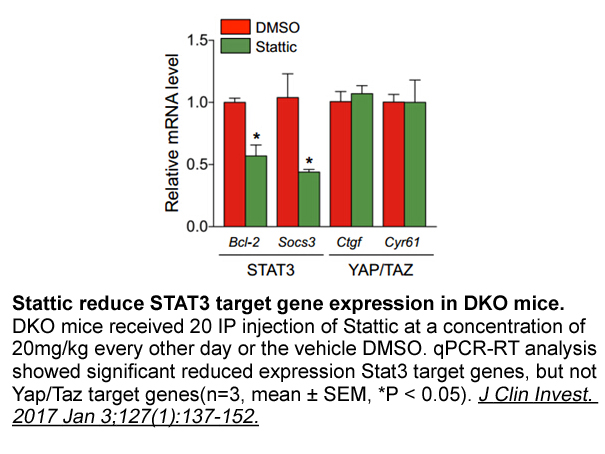
The aim of this study was to evaluate the role of aberrant methylation of promoter regions of tumor suppressor genes in the clonal evolution from MGUS to MM. Thus, we analyzed in MGUS, SMM, and symptomatic MM patients, the methylation status of 4 genes—p15, p16, p53, and DAPK—whose promoter hypermet
-
Compounds and administered orally to
2021-04-17

Compounds , , and administered orally to fasted Harlan Sprague-Dawley rats 1h prior to trigeminal stimulation, decreased extravasation in this model in a dose-related manner, with an estimated ID of 1, 10 and 100μg/kg, respectively (determined 15min after stimulation, ). For comparison, the clinical
-
br Deregulation of CDK Many neurotoxic or stress
2021-04-17

Deregulation of CDK5 Many neurotoxic or stress conditions like ischemic Wortmannin damage, oxidative stress, mitochondrial dysfunctions, excitotoxicity, Aβ exposure lead to disruption of the tight regulation of Cdk5 (De Strooper et al., 2010). Calpain-mediated cleavage of p35 to p25 is activated
-
Currently approved anti obesity drugs
2021-04-17
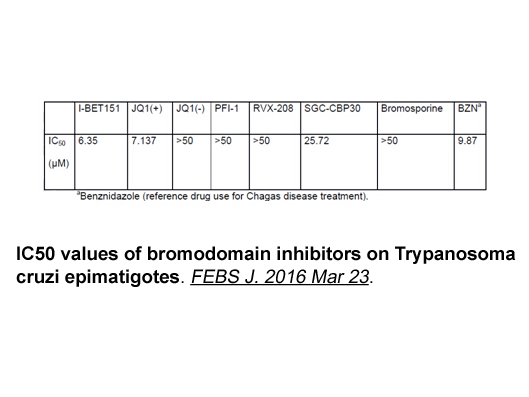
Currently approved anti-obesity drugs for long term use such as orlistat, lorcaserin and liraglutide are efficient in reduction of weight gain but are limited in usage due to their adverse effect profile and higher cost (Krentz et al., 2016; Mopuri and Islam, 2017). In ceritinib australia to this,
-
Dopamine activity in the PFC and striatum may
2021-04-16

Dopamine activity in the PFC and striatum may be antagonistic, meaning that lower levels of dopamine in the striatum tend to correspond to higher levels of dopamine in the PFC and vice versa (Cools and D'Esposito, 2011; Tunbridge et al., 2006). Human PET studies have reported that dopaminergic PFC f
-
Chk is dramatically induce by the IL family of cytokines
2021-04-16
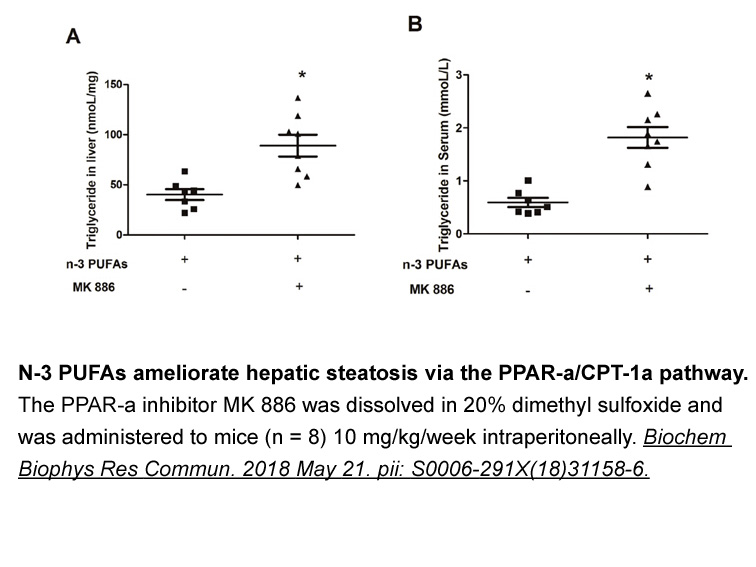
Chk is dramatically induce by the IL-4 family of cytokines and equally dramatically inhibited by IFN-γ, a regulation that appears to be specific for human monocytes. In primary human T cells, Chk is not normally present, but it can be induced by potent activators of T (-)-Quinpirole hydrochloride s
-
br Allosteric inhibitors In general candidate drugs that bin
2021-04-16
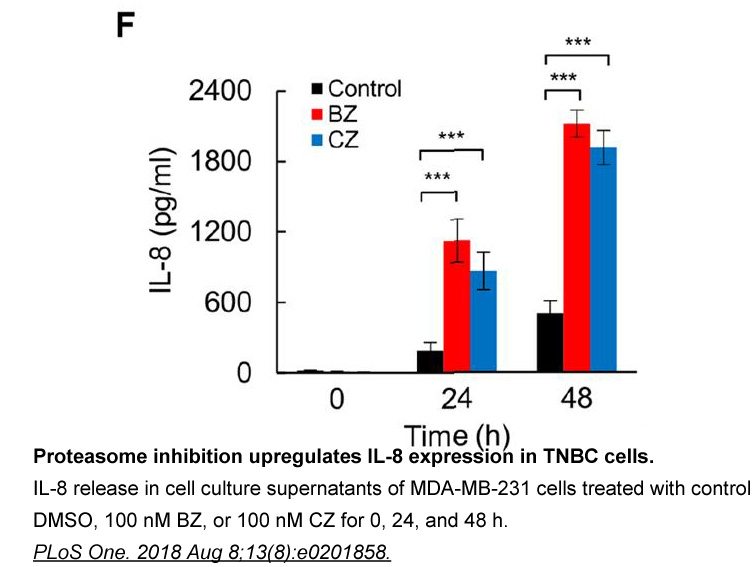
Allosteric inhibitors In general, candidate drugs that bind to a GPCR at a site that is distinct (allosteric site) from the binding site of the endogenous agonist (orthosteric site) are attracting increasing attention 39, 42, 58. Allosteric modulators display saturability of their effect, probe d
-
Impulsive burying and freezing behaviors in response to aver
2021-04-16
Impulsive burying and freezing behaviors in response to aversive stimuli may represent attempts to avoid novel and/or aversive stimuli. These behaviors can be assessed utilizing the marble burying and conditioned fear tasks, respectively. For example, Wistar rats in proestrus and ovariectomized rats
-
We experienced difficulties in observing maturation of hESC
2021-04-16
We experienced difficulties in observing maturation of hESC retinas in rd1 mice even with immunosuppression, but with NOG-rd1-2J mice the transplanted hESC retinas consistently developed mature ONL with rod and cone opsins. Furthermore, graft photoreceptors show signs of developing IS/OS structures
-
br Structure of USP Schematic representation of the USP
2021-04-16
Structure of USP7 Schematic representation of the USP7 domain architecture is shown in Fig. 3B. USP7 is a 135 kDa protein that consists of seven domains, including the N-terminal TRAF-like (Tumor necrosis factor Receptor–Associated Factor) domain, followed by the catalytic core domain and the fiv
-
br Introduction Detection of driver mutations
2021-04-16
Introduction Detection of driver mutations in patients with advanced non-small cell lung cancer (NSCLC) is critical because they receive great benefit from kinase inhibitors [[1], [2], [3], [4]]. However, it is often difficult to obtain tumor tissue in advanced NSCLC patients. Cell-free DNA (cfDN
-
Based on the SUMO SIM interaction involved
2021-04-16
Based on the SUMO–SIM interaction involved in SUMOD positioning, a SUMO2ΔSBD (SIM-binding domain; Q30A, F31A, I33A) mutant can be investigated that disrupts this important binding interface (Eisenhardt et al., 2015; Meulmeester, Kunze, Hsiao, Urlaub, & Melchior, 2008). In Fig. 4A, multiturnover assa
-
All DGKs have at least two cysteine rich
2021-04-16
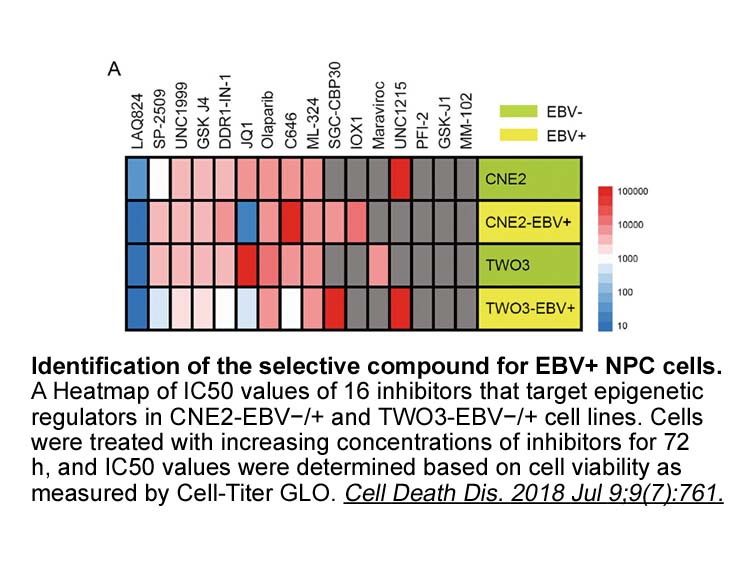
All DGKs have at least two cysteine-rich regions homologous to the C1A and C1B motifs of PKCs [26]. In theory, these domains may bind DAG, perhaps localizing DGKs to where DAG accumulates. However, no DGK C1 domain has so far been conclusively shown to bind DAG. In fact, structural predictions sugge
-
br Structure of ketosteroid dehydrogenase Overall fold High
2021-04-15
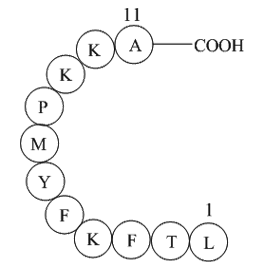
Structure of 3-ketosteroid Δ1-dehydrogenase Overall fold — High-resolution crystal structures of Δ1-KSTD are currently available for the Δ1-KSTD1 isoenzyme from R. erythropolis SQ1 [30]. The Δ1-KSTD1 molecule has an elongated shape, and consists of two domains, an FAD-binding domain and a catalyt
-
The positive correlation between ATG and DCTPP TCGA
2021-04-15

The positive correlation between ATG7 and DCTPP1 (TCGA data) suggested our hypothesis that DCTPP1 may affect the phenotype of prostate tumor, or maybe other types of tumors as well, through its role in autophagy. To test this hypothesis, we carried out western-blot experiments in which the ratios of
16940 records 728/1130 page Previous Next First page 上5页 726727728729730 下5页 Last page